Lesson 1 · Module 4
Systems thinking and network facilitation
Learn to see communities as webs of relationships, use systems thinking in facilitation, and map and weave networks from the local to the global scale.
Systems thinking is crucial for working as a facilitator because it enables a holistic understanding of complex problems by focusing on interconnections, relationships and patterns rather than isolated parts. It helps uncover root causes, anticipate unintended consequences, and develop sustainable, integrated solutions, which is especially vital in addressing challenges like climate change, public health or community transformation. By shifting from linear to circular thinking, systems thinking fosters innovation, improves decision-making, and enhances resilience through feedback loops and adaptive strategies.
Networks facilitation is essential because it supports collaborative, multi-stakeholder efforts by helping groups see the bigger picture and navigate complex interdependencies and systems. Effective facilitation maintains a systems perspective during meetings and project development, ensuring that immediate tasks are framed within broader organisational, ecological and societal contexts. It promotes inclusive dialogue, surfaces diverse mental models, and uses tools like causal loop diagrams and system maps to build shared understanding. This enables more adaptive, participatory and equitable outcomes, particularly in fields like community development, policy design and sustainability.
“The new science keeps reminding us that in this participative universe, nothing lives alone. Everything comes into form because of relationship. We are constantly called into relationship – to information, people, events, ideas, life. Even reality is created through our participation in relationships. We choose what we notice; we relate to certain things and ignore others. Through these chosen relationships we co-create our world. If we are interested in affecting change, it is crucial to remember that we are working within webs of relations, not with machines.” — Margaret Wheatley
Holism and reductionism
Holistic and systems science is by no means the opposite of what has been called “reductionist science”. Rather than denying the value and explanatory power of reductionism, holistic and systems science simply points out that even this powerful method of investigation has its own limitations and blind spots. Holistic and systems science tries to include and transcend reductionism, and aims to make us more conscious of the role of the scientist herself in the way she observes Nature as a participant rather than a detached investigator.
Reductionism is based on an explanatory model that believes that it is possible to understand the functioning of the whole (like an animal, an ecosystem, the biosphere, or a social or economic system) by dividing that whole into its many constituent parts. These parts are then analysed and explained part by part, and the assumption is that if we understand all the parts and put them back together we will also understand the whole. To put it simply, in reductionism the functioning of the whole is understood to be nothing more than the sum of its constituent parts.
This way of thinking has come about because of the use of mechanistic metaphors that compared living beings and life’s processes (including our social systems) with the functioning of machines. For most of the history of science since the Renaissance and the subsequent ‘scientific revolution’, most scientific discoveries were based on this kind of reductionist and mechanistic thinking, including much in the social sciences and even more so in economics (in reality a subset of the social sciences).
It would be wrong to condemn this approach as a mistake, since we have learned a lot through the use of this method and most of our modern-day technologies are based on insights developed through this kind of science. Many of these scientific discoveries have helped to improve the lives of many people. So there is much to be appreciated about reductionism and mechanistic thinking.
It only becomes a problem when science turns into dogma, and this kind of approach, rather than being understood as one of many possible ways of seeing the world, is promoted as the only valid way of gaining understanding about reality. The side effects of this short-sightedness and scientific dogmatism are that many people, if not the majority of Western secular culture, have come to believe that as human beings we are indeed separate from nature, rather than understanding that this separation is a result of our way of thinking and the organising ideas we employ. Many of the environmental and social problems of our time come from this one-sided view of the world.
The key insight of holism and of systems and holistic science is that by reducing the whole to the sum of its parts, and explaining its functioning with exclusively mechanistic metaphors and quantitative analysis, we are missing out on truly understanding the world of qualities that we live our daily lives in. From the perspective of holistic science, the whole is more than the sum of its parts and cannot be understood by a supposedly detached “objective observer” from the outside.
The way to gain a deeper understanding of the whole is by acknowledging our deeply participatory entanglement with the world we live in. We need to pay attention to interactions and relationships between the different “parts” that bring forth the whole. Most of the important properties and characteristics of the whole emerge out of these interactions, and many of them cannot simply be measured as quantities but have to be experienced directly as qualities.
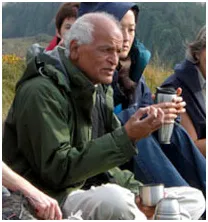
During the 20th century and the beginning of our current century, more and more scientists became aware of the limitations of the reductionist, mechanistic, quantity-focused approach to science, and tried to develop theories and methodologies that offered a complementary way of understanding the natural world and practising science. We will only take a brief look at some of these attempts and a few early examples of holistic thinking in science, like the work of Johann Wolfgang von Goethe.
At Schumacher College in the south-west of England, scientists, philosophers, activists and innovators from all over the world have come together for the last 20 years to explore and develop holistic science. Since 1998 the college has offered the world’s first master’s programme in holistic science, in addition to many shorter courses with some of the leading holistic scientists of our times. Some of these people and their ideas can also be explored through the Edge Foundation.
Systems thinking, chaos and complexity
Since the beginning in the 1950s, when people like Ludwig von Bertalanffy and Kenneth Boulding developed the field of ‘General Systems Theory’ and Norbert Wiener and Jay Forrester developed the field of ‘Cybernetics’, there have been many attempts to break free from the reductionist paradigm and develop a more holistic and systemic understanding of the complexity of the world we live in. Early systems thinkers were still ultimately aiming to improve their ability to better predict and control the system in question. The introduction of insights from chaos theory and non-linear mathematics into systems science sparked the development of complexity theory.
Interconnectedness, unpredictability and uncontrollability are key characteristics of all complex dynamic systems. In dealing with complexity rather than mechanisms, the aim of science shifts from improving our ability to predict and control, to better understanding the dynamics and relationships of the systems we participate in, so that our participation can be more appropriate.
The map of complex systems below groups the main areas of research around two central ideas: emergence over scale, and self-organisation over time.
| Area | Topics |
|---|---|
| Systems theory | Homeostasis, feedbacks, self-reference, goal-oriented/guided behaviour, system dynamics, sense making, entropy, cybernetics, autopoiesis, information theory, computation theory, complexity measurement |
| Nonlinear dynamics | Time series analysis, ordinary differential equations, iterative maps, phase space, attractors, stability analysis, population dynamics, chaos, multistability, bifurcation, coupled map lattices |
| Game theory | Prisoner’s dilemma (PD), iterative PD, n-person PD, rational decision making, bounded rationality, irrational behaviour, cooperation versus competition, spatial/network game theory, evolutionary game theory |
| Collective behaviour | Social dynamics, collective intelligence, self-organised criticality, herd mentality, phase transition, agent-based modelling, synchronisation, ant colony optimisation, particle swarm optimisation, swarm behaviour |
| Networks | Scale-free networks, social network analysis, small-world networks, community identification, centrality, motifs, graph theory, scaling, robustness/vulnerability, systems biology, dynamical networks, adaptive networks |
| Evolution and adaptation | Artificial neural networks, evolutionary computation, genetic algorithms/programming, artificial life, machine learning, evo-devo, artificial intelligence, evolutionary robotics, evolvability |
| Pattern formation | Spatial fractals, reaction-diffusion systems, partial differential equations, dissipative structures, percolation, cellular automata, spatial ecology, self-replication, spatial evolutionary biology, geomorphology |
Complex systems organisational map, after the diagram by Hiroki Sayama shown on the Wikipedia page Complex systems.
“Complexity theory is becoming a science that recognizes and celebrates the creativity of nature. Now that’s pretty extraordinary because it opens the door to a new way of seeing the world, recognizing that these complex dynamic systems are sensitive to initial conditions and have emergent properties. We have to learn to walk carefully in relation to these complex systems on which the quality of our lives depends, from microbial ecosystems to the biosphere, because we influence them although we cannot control them. This knowledge is new to our western scientific mentality…” — Brian Goodwin (et al., 2001, p.27)
You can also explore a map of many of the leading scholars and areas of research in complexity science, from the 1940s to today.
The sciences of complexity are a variety of process-oriented areas of research exploring non-linear dynamics within complex systems. The simplest definition of a complex system is any system with more than three interacting variables. Complexity is thus a common feature of the world we inhabit.
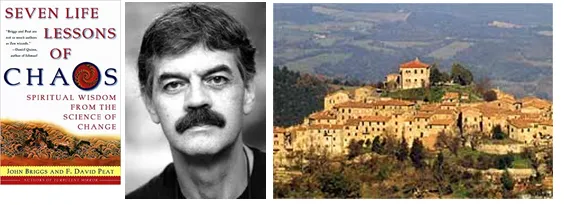
When we speak about chaos theory, it is important to understand that chaos does not refer to a state of absolutely incoherent disorder; rather, “the scientific term chaos refers to an underlying interconnectedness that exists in apparently random events.” Briggs and Peat explain: “Chaos science focuses on hidden patterns, nuance, the sensitivity of things, and the rules for how the unpredictable leads to the new” (Briggs & Peat, 1999, p.2). Chaos theory provides a radically different framework for studying complex dynamics. It highlights the limitations that are inherent in a reductionist and mechanistic (linear, cause-and-effect based) analysis of complex systems.
“Chaos theory teaches us that we are always a part of the problem and that particular tension and dislocation always unfold from the entire system rather than from some defective “part.” Envisioning an issue as a purely mechanical problem to be solved may bring temporary relief of symptoms, but chaos suggests that in the long run it could be more effective to look at the overall context in which particular problems manifest itself.” — Briggs & Peat (1999, pp.160–161)
In Seven Life Lessons of Chaos: Spiritual Wisdom from the Science of Change, John Briggs and F. David Peat unfold seven lessons for embracing some of the deeper insights of chaos theory in our daily lives:
- Be creative: engage with chaos to find imaginative new solutions and live more dynamically.
- Use butterfly power: let chaos grow local efforts into global results.
- Go with the flow: use chaos to work collectively with others.
- Explore what’s between: discover life’s rich subtleties and avoid the traps of stereotypes.
- See the art of the world: appreciate the beauty of life’s chaos.
- Live within time: utilise time’s hidden depths.
- Rejoin the whole: realise our fractal connectedness to each other and the world.
A science of qualities
The emerging holistic sciences are characterised by a series of shifts in perspective. Among these shifts are the following:
- A shift from focusing on quantities and measurement to focusing on qualities of interactions and direct experience.
- A shift from mechanistic metaphors towards organismic metaphors that are more appropriate to describe the processes of life.
- A shift from a science that tries to maximise our ability to predict and control nature towards a new understanding that aims for appropriate participation in the processes that support all life on Earth.
- A shift from an evolutionary theory mainly focused on scarcity, individualism and competition towards an understanding of evolution based on abundance, diversity, symbiosis and cooperation.
- A shift away from the myth of the independent, detached, objective observer towards understanding science as a participatory activity based on inter-subjective consensus building.
- A shift from a single-minded focus on reductionism towards a more holistic science that acknowledges reductionism as a useful approach but also aims for more holistic and systemic interpretations of the complex problems we are facing.
- A shift from the monopoly of rationalism towards acknowledging the crucial roles that intuition, imagination and creativity play in science, to complement and guide rational and analytical approaches to understanding nature.
This list is by no means complete, and the emergence of a more holistic and participatory science of qualities will continue to inform and transform the way we do science. As we move towards a more holistic understanding of life, some of the metaphors that have also guided our cultural and economic life may change too. Fritjof Capra suggests that “Life is much less a competitive struggle for survival than a triumph of cooperation and creativity” (Capra, 1996, p.238). This single shift in perspective, or organising idea, lies at the core of our collective attempt to co-create a more just and more sustainable world together.
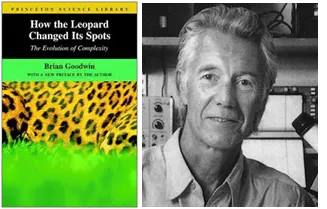
“Darwinism sees the living process in terms that emphasize competition, inheritance, selfishness, and survival as the driving forces of evolution. These are certainly aspects of the remarkable drama that includes our own history as a species. But it is a very incomplete and limited story, both scientifically and metaphorically, based upon an inadequate view of organisms; and it invites us to act in a limited way as an evolved species in relation to our environment, which includes other cultures and species. These limitations have contributed to some of the difficulties we now face, such as the crisis of environmental deterioration, pollution, decreasing standards of health and quality of life, and loss of communal values. But Darwinism short-changes us as regards our biological natures. We are every bit as cooperative as we are competitive; as altruistic as we are selfish; as creative and playful as we are destructive and repetitive. And we are biologically grounded in relationships which operate at all the levels of our beings as the basis of our natures as agents of creative evolutionary emergence, a property we share with all other species.” — Brian Goodwin (1994, p.xiv)
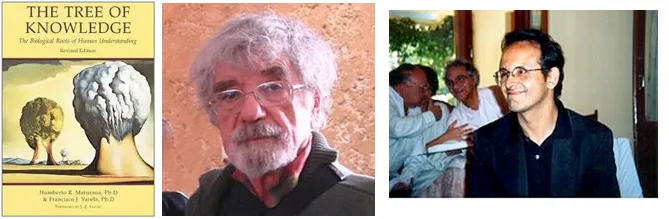
The process of life itself (diversifying, evolving and complexifying) is the pattern that Heraclitus spoke of two millennia ago when he spoke of the hidden connections of nature. Gregory Bateson was one of the first to understand the human mind as a conscious reflection of the processes of Nature. Bateson inspired the Chilean biologists and cognitive scientists Humberto Maturana and Francisco Varela to propose the Santiago Theory of Cognition.
Fritjof Capra describes the central insight of this theory as “the identification of cognition, the process of knowing, with the process of life.” For Maturana and Varela, cognition can be understood as “the activity involved in the self-generation and self-perpetuation of living networks.” In this context, cognition is recognised as “the very process of life,” and “mind – or, more accurately, mental activity – is immanent in matter at all levels of life” (Capra, 2002, p.30). The implications of this insight radically alter our understanding of mind and matter, as well as of humanity and nature. A civilisation informed by such an understanding will express fundamentally different intentions through fundamentally different design.
In their groundbreaking book The Tree of Knowledge, Maturana and Varela (1987) suggest that as we begin to understand how we know, we have to realise that “the world everyone sees is not the world but a world which we bring forth with others.” Maturana’s ‘biology of love’ suggests that love is the central process by which we bring forth the world. The world as we know it emerges out of the way we relate to each other and to natural processes. This leads Maturana and Varela to the important conclusion “that the world will be different only if we live differently” (Maturana & Varela, 1987, p.245).
Social networks facilitation
“A growing number of people are recognizing that in order to secure the clean air, water and food that we need to healthfully survive, we have to become guardians of the places where we live. People sense the loss in not knowing their neighbours and natural surroundings and are discovering that the best way to take care of themselves and to get to know neighbours, is to protect and restore their region.” — First Continental Bioregional Congress
While many early intentional community projects saw themselves as ‘lifeboats’ in a civilisational shipwreck, almost all of them understand how impossible this isolationist scenario is. We must create a sustainable, thriving and regenerative future for all, where nobody is left behind, or we will not succeed as a species in the planetary era.
Consequently, most mature intentional communities in the world have, over the last two decades, developed extensive outreach projects in their local regions. They have learned to speak the language of, and build partnerships with, their regional and national governments, and through the Global Ecovillage Network (GEN) they have even become a consultative influence at the United Nations.
Jonathan Dawson, economist and former president of GEN, has offered a new metaphor for ecovillages: from lifeboats to ‘yoghurt culture’, transforming the nutrients of their regions into a delicious, digestible and long-lasting form of cultured nourishment.
It is now accepted that it is impossible to create or sustain a community, or any project or initiative, in isolation, and that many of the synergies and win-win design solutions that define regenerative cultures can only happen at a regional scale. So although we need to start with sustainable communities, the process does not end there. Eventually, when a group is formed and begins to collaborate effectively, there is a need to expand the community vision beyond the original group, seeking ways to connect with other groups in regional and/or global networks, including under-represented or marginalised groups and non-human species.
As the group expands its spatial horizons from the local to the regional to the global, it will also expand its temporal horizons to its ancestors, who left a rich legacy and whose traditional wisdom might hold at least part of the key to a regenerative and thriving future. In becoming conscious of who we are working for (less for ourselves and more for the yet unborn future generations), we are reconnecting with the ancient wisdom of how to live wisely on this Earth. This gives our work two dimensions:
- A horizontal dimension, where we create living networks with other groups, other projects and other communities in our local, regional and/or global environment.
- A vertical dimension, where we acknowledge our vital connection with history, with all living beings that were here before us and with all living beings that will be here after us.
In the design framework that supports our approach, we call this awareness and action across multiple spatial scales (local, regional, global) and temporal scales (the distant past, the present and the future) scale-linking design. While we engage in sustainable community design to take a stance and offer practical solutions in the transition towards a sustainable human presence on Earth, many of the patterns and processes we need to create in this transition cannot be created at the scale of a small human community of a few dozen or a few hundred people. They require collaboration between communities to create these patterns at a bioregional scale.
Just as the intentional community culture has changed its metaphor from ‘lifeboats’ to ‘yoghurt culture’, most sustainable communities and community founders understand that to chase the dream of complete independence and isolated self-sufficiency, so popular among the hippies of the 1970s, is a futile goal. In many ways this goal goes hand in hand with the story of separation.
As the story of interbeing gains greater recognition, regional, national and global interdependence becomes more easily understood. Thus it is important to design and build scale-linked structures of increased local and regional ‘community care’ to meet basic needs within thriving regional economies that are elegantly adapted to the bio-cultural opportunities and challenges of their particular region.
This requires us to build networks within our bioregions and beyond, educate ourselves and others, and engage in activism that discards dysfunctional systems and generates new systems that nourish and sustain human and non-human life.
Networking with nature
“Bioregional awareness teaches us in specific ways. It is not enough to just “love nature” or to want to “be in harmony with Gaia”. Our relation to the natural world takes place in a place, and it must be grounded in information and experience.” — Gary Snyder
Every person lives in a specific bioregion, a life-place that is an essential component in the planetary web of life: of living networks within networks, linked natural cycles both fast and slow moving, that make up the planetary life-support system.
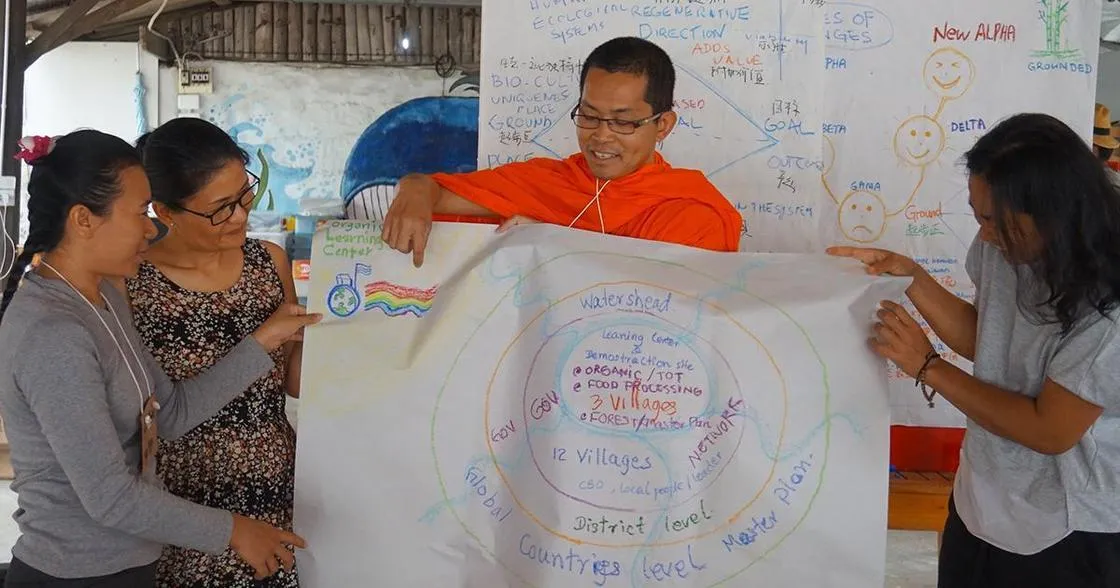
Since everything is connected to everything else in this planetary system, global changes like climate change have drastic local and regional impacts. Similarly, efforts to restore the health, resilience and diversity of local and regional ecosystems will eventually contribute to regeneration and healing at a planetary scale.
It is at the human scale that sustainability transforms from a concept into a lived reality. As designers intending to contribute to a regenerative future for all of humanity, we may choose to start with one group adapted to a particular place, yet remain aware that the bioregion, and the broader community of life which shares this bioregion, need to be taken into account.
A wider strategy is needed to weave separate communities together and increase bioregional awareness. Kirkpatrick Sale, one of the pioneers of the bioregional approach, spoke about ‘reinhabitation’. The ecological, social and cultural uniqueness of a particular place needs to be safeguarded and its diversity restored wherever possible. Here are some guidelines for strengthening the resilience and vitality of a bioregion:
- Give priority to active projects: learn by doing essential work to achieve natural health in our life-places.
- Restore and maintain natural features wherever possible: the health of the social fabric will be improved with this restoration.
- Develop regenerative means to satisfy basic human needs: access to food, water, energy, shelter, materials and education (knowledge, information and wisdom) is essential.
- Support living in place in the broadest possible way, from economics and culture to politics and philosophy: this involves both proactive undertakings that create positive alternatives, and defence against ecological disruption and social injustice.
- Heighten awareness of issues pertinent to the bioregion through public media, involvement in local politics, and education, both local and global.
Building effective networks
“Transformation that leads to healthy communities is the result of many collaborations among network members. Scientists describe this phenomenon – where local interactions lead to global patterns – as emergence. We can guide emergence by understanding, and catalyzing, connections.” — Valdis Krebs and June Holley
Communities are built on connections. Connections are the ‘glue’ that holds a community together, the way we find the things we’re looking for, the way we learn the things we want to know. To see and enjoy the opportunities in our bioregion, yielding emergent success and resilient communities, we need to build and strengthen connections. We need a network.
Like the knots in a hammock, our connectivity holds us together in small groups and families, in communities and in the whole web of life. Our groups and our communities are strengthened when we improve our connectivity, internally and externally. This gives us greater economic opportunities as well as social cohesion. The two key elements of building connectivity are knowing the network and knitting its components together.
This section is largely based on the document Building Smart Communities through Network Weaving, by Valdis Krebs and June Holley. Valdis Krebs is the founder and chief scientist at Orgnet LLC. June Holley is founder and President/CEO of the Appalachian Center for Economic Networks.
Know the net
The first step in the conscious design of networks is to know the complex human system in which we are embedded. In this step we identify like-minded people and organisations, as well as those who might oppose our projects. Often, when setting up a community-oriented project or advocating more sustainable lifestyles, we face opposition or mistrust from local government, businesses or neighbours. If we truly want to hear from them, influence them and gain their trust, we must include them in our web of connections.
Diversity is crucial for every ecosystem, and also for a sustainable community. There is a richness of exchange and encounters happening on the edges of any given entity, as we learn from the permaculture principle called the ‘edge effect’. The highly productive ‘edge’ in social design refers to the places where different people, different groups and different cultures meet and communicate. Diverse points of view, even so-called adversaries (who can be allies-in-formation), are needed to increase the amount of social ‘edge’, raise the number and diversity of potential strategies, and enrich our worldview.
In practical terms, five questions are useful to start designing our web of connections:
- Who are the project’s natural allies, supporters and potential ‘adversaries’?
- What are their interests and needs?
- With whom can we work directly? Who is within our reach?
- Who are we hoping to influence through the project?
- How can we include them in the process?
An easy way to organise all this bioregional information is through a network map: an excellent tool for visually tracking our ties and designing strategies to create new connections. A network map shows the nodes and links in the network. Nodes can be people, groups or organisations, while links can show relationships, flows or transactions. Below are some criteria that can be useful in the process of mapping our contacts and their potential contribution to the project.
- Expertise: Who are the experts in process, planning and practice?
- Leadership: Who is playing leadership roles in the community?
- Innovation: Who are the innovators?
- Access to funding: What are our connections with funding agencies?
- Contacts with authorities or other groups.
- Interest: Who is showing a strong interest in our project?
- Willingness to engage directly.
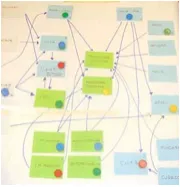
The network map below shows key relationships between stakeholders.
Five general patterns are observed in all effective networks:
- Commonality: nodes in a network are linked by common attributes, goals or governance.
- Diversity: a diversity of connections maximises innovation.
- Redundancy: having several paths between any two nodes supports network resilience in case a node or link is damaged or removed.
- Prominence: the more prominent nodes are either hubs (nodes with many direct connections), brokers (nodes that connect otherwise disconnected parts of the network), or boundary spanners (nodes that connect two or more clusters). All these are critical to network health.
- Short paths: the average path length in a strong network tends to be short. Long paths result in the delay and distortion of information flow and knowledge exchange.
Knit the net
A vibrant community network is generally built in four phases, each with its own distinct topology. Each phase builds a more adaptive and resilient network structure than the prior phase. Network mapping can be used to track your progress through these four stages:
- Scattered fragments
- Single hub-and-spoke
- Multi-hub small-world network
- Core/periphery
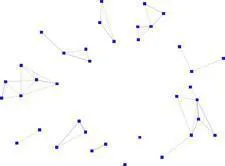
Scattered fragments. A group or community-oriented project usually begins in an environment where small emergent clusters are already organised around common interests or goals, but these clusters are often isolated from each other. Without active leaders or network weavers who take responsibility for building a network, spontaneous connections between groups emerge very slowly, or not at all. Instead of allowing these fragments to drift in the hope of making a lucky connection, network weavers actively create new interactions between them.
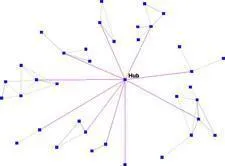
Single hub-and-spoke network. Network weavers begin with a hub-and-spoke network, with the weaver as the hub. The weaver has the vision, the energy and the social skills to connect to diverse individuals and groups and start information flowing to and from them. Weavers usually have external links outside the community to bring in information, ideas and other resources. An organisation can also play this role.
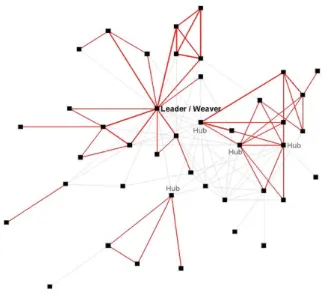
Multi-hub ‘small world’ network. In healthy networks, the spokes of the hub do not remain separated for long. The weaver begins connecting those individuals and clusters who can collaborate or assist one another in some way. At the same time, the weaver begins encouraging others to weave the network as well, which leads to a multi-hub or ‘small world’ network.
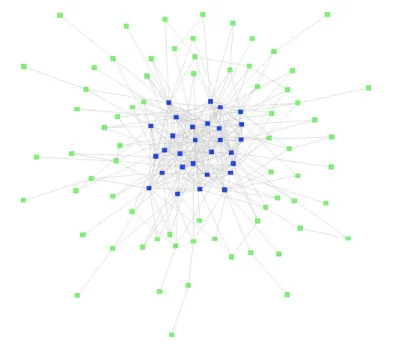
Core/periphery network. The end goal for vibrant, sustainable community networks is the core/periphery model. This topology emerges after many years of network weaving by multiple hubs. It is a stable structure that can link to other well-developed networks in other regions. The network core in this model contains community members who are network weavers and have developed strong ties among themselves.
Here is an example of someone who began with a regular suburban street, a memory of community, and an inspiring encounter with visionary leaders. Through networking, she transformed her neighbourhood into a tight-knit community, starting with scattered fragments, becoming a network weaver at the hub, and eventually developing a vibrant, healthy network with other neighbourly network weavers.
Shani Graham’s talk ‘Take a Street and Build a Community’ at TEDxPerth.
Global networking
As inhabitants of this Earth we breathe the same air, we watch the same starry skies, and as humans we share the same basic needs. Every single one of us can choose to become a part of the solution (our mutual survival), and we can support one another in doing so.
When the first astronauts visited the Moon, they reported the dramatic experience of looking back and seeing our beautiful blue planet as such a vulnerable home in the vast universe. The short documentary Overview, from Planetary Collective, interviewed astronauts about the experience of seeing Earth from space.
Looking up at the stars from down here on Earth, or looking down at Earth from space as astronauts do, we can feel both deeply moved to protect our beloved and unique home, and also incredibly tiny by comparison with the magnitude of the task. How can we possibly make a difference? How can one person begin to reverse so much devastation and bring about the Earth-honouring culture we all need to survive and thrive?
There is an oft-repeated quote attributed to the great nonviolent leader, writer and activist Mahatma Gandhi: ‘Be the change you want to see in the world.’ In fact Gandhi never said that; the expression was coined in 1974 by educator and author Arleen Lorrance. Gandhi did make the related point that ‘If we could change ourselves, the tendencies in the world would also change… This is the divine mystery supreme.’
Both great quotations remind us that we need to begin with ourselves. We begin by changing ourselves, embodying what we wish to see in the world beyond ourselves. We become a node in a network, perhaps a very small one initially, which over time begins to radiate out as we naturally communicate with the people and other beings around us, see them, listen to them and connect them with each other. And sooner or later we may find that the world reflects back to us the better world that we have become inside.
When we collaborate in global-local networks, we can unleash the potential for collaborative abundance at the regional scale and leave behind our current alienated consumer culture based on greed, war and the myth of perpetual growth. We can shift our culture’s guiding narrative from the ‘story of separation’ to the ‘story of interbeing’.
Charles Eisenstein speaks about the story of interbeing that our culture is moving towards, and how it can prevent despair and empower us for action.
Here are a few examples of the ever more numerous global-local networks that are filling up the map of the Earth with nodes and points of connection and hope, with people who are working together for a thriving and peaceful future: the Global Ecovillage Network, the Transition Network and Dragon Dreaming.
The Global Ecovillage Network (GEN) is a sister organisation to Gaia Education. GEN’s vision is ‘a world of empowered citizens and communities, designing and implementing their own pathways to a sustainable future, and building bridges of hope and international solidarity’. As a truly global network based in local ecovillages, GEN’s goals are:
- To advance the education of individuals from all walks of life by sharing the experience and best practices gained from the networks of ecovillages and sustainable communities worldwide.
- To advance human rights, conflict resolution and reconciliation by empowering local communities to interact globally, while promoting a culture of mutual acceptance and respect, effective communications, and cross-cultural outreach.
- To advance environmental protection globally by serving as a think tank, incubator, international partner organisation, and catalyst for projects that expedite the shift to sustainable and resilient lifestyles.
- To advance citizen and community participation in local decision-making, influencing policy-makers, and educating the public, to accelerate the transition to sustainable living.
Another example of a powerful and vibrant international network is the Transition Network, a ‘movement of communities coming together to reimagine and rebuild our world’, which now has member communities all over the world.
Transition was co-founded by environmentalist Rob Hopkins in 2005 with the aim of preparing communities for the two challenges of climate change and peak oil. The main aim of the project is to raise awareness of sustainable living, drastically reducing carbon emissions (to mitigate the effects of climate change) and significantly increasing local resilience (to mitigate the effects of peak oil). Communities are encouraged to seek out methods for reducing energy usage as well as increasing their own self-reliance.
“If we collectively plan and act early enough there's every likelihood that we can create a way of living that's significantly more connected, more vibrant and more in touch with our environment than the oil-addicted treadmill that we find ourselves on today.” — Transition Network website
The Transition approach reminds us that by shifting our mindset we can recognise the coming post-cheap-oil era, and the global challenge to stay within a very limited carbon budget to avoid runaway climate change, as an opportunity rather than a threat. The Transition Towns movement has created local, regional and global networks of people who want to take an active role in designing the future of their communities.
Dragon Dreaming is a learning, living global community with a living systems approach to building successful organisations and projects for the Great Turning. Its three principles are personal growth, community building and service to the Earth. It has become a project design method, a book and a worldwide network assisting activists, non-profits, and government and business organisations. An often-repeated slogan in Dragon Dreaming is ‘If it’s not fun, it’s not sustainable.’
Dragon Dreaming, which emerged from the work of the Gaia Foundation in Australia, produces an ebook that is available for free download in eleven languages. Dragon Dreaming embodies playfulness, creativity and the wisdom of the traditional Australian Aboriginal people, especially the concept of the Dreamtime.
| Stage | Steps | Between |
|---|---|---|
| Dreaming | Awareness, motivation, gathering information | Individual and theory |
| Planning | Considering alternatives, designing strategies, testing/prototyping | Theory and environment |
| Doing | Implementation, administration and management, monitoring progress | Environment and praxis |
| Celebrating | Acquiring new skills, transforming results, discerning wisdom | Praxis and individual |
The pattern of the Dragon Dreaming wheel: four stages of three steps each, arranged in a circle around two axes, individual–environment and theory–praxis. Source: Dragon Dreaming.
Systems thinking and network facilitation
Your progress is saved in this browser. Register to save it on every device.
Text © IN.PACT partnership, shared under CC BY-SA 4.0. Images, videos and quoted works belong to their authors and are not covered by this licence unless stated.