Lesson 3 · Module 1
Power dynamics and compassionate communication
Understand power, rank and privilege, practise compassionate communication and deep listening, give and receive feedback, and host talking circles.
Effective facilitation requires the ability to recognise and manage complex power dynamics within a group. Skilled facilitators ensure that dominant voices do not overshadow quieter participants, creating space for equitable input. They use techniques like intentional group composition, structured turn-taking and inclusive design to balance influence and empower marginalised perspectives. Expert facilitators are adept at navigating conflicts arising from unequal power distribution, transforming tension into constructive dialogue.
Central to facilitation is active listening and empathetic engagement, which form the foundation of compassionate communication. Facilitators need to be able to validate participants’ emotions, rephrase contributions to ensure understanding, and foster psychological safety. This encourages openness, trust and vulnerability. By maintaining neutrality, using respectful language, and responding with care (especially during conflict), facilitators need to learn to create an environment where individuals feel seen, heard and respected.
Introduction: power and love
“We need leaders who know how to nourish and rely on the innate creativity, freedom, generosity and caring of people. We need leaders who are life-affirming rather than life-destroying. Unless we quickly figure out how to nurture and support this new leadership, we can’t hope for peaceful change.” — Margaret J. Wheatley
Power might be defined as our ability to create, sustain, change and influence people, groups, systems and life. It is our ability to consciously contribute to the process of evolution.
To empower ourselves, we need to distinguish between two types of power:
- Repressive power, or ‘power over’, suppresses the life force in individuals, society and nature.
- Creative power, or ‘power with’, comes from our individual insight, wisdom and compassion, and enhances life.
Opening up to the state of our world can generate a feeling of hopelessness and despair. Many of us have given up, sometimes quite subtly, on ourselves and on human survival on this planet. Mass and social media feed us misinformation and a cheap imitation of real life, and we collude with this, numbing ourselves to avoid taking in the reality of societal collapse.
Yet what a time to wake up and reclaim our personal power! David W. Orr said, ‘Hope is a verb with its sleeves rolled up.’ Finding sources of hope for a better future can counteract despair and spur us to take creative action in life.
There are things we can change within ourselves, in our families and in our communities. We need to be receptive, equanimous, courageous and wise to see reality clearly and to discern what we can change from what we cannot. These qualities only emerge fully when we get the support we need to listen to our inner self, accept ourselves wholeheartedly as we are, and accept the world wholeheartedly as it is. Paradoxically, from this acceptance, the power to generate change can emerge.
A community can be a potent place to create the support systems we need, to investigate the power of acceptance, to explore vulnerability, and ultimately to express our creative power together with others.
As we make our way along this journey, inevitably we will encounter power abuses, oppression and the enactment of unearned privilege. We need fluency in these things in order to understand what we’re seeing and to treat others with respect.
In this part of the module, we will first explore the nature of power, privilege and oppression. Then we will look at what it takes to share power with others as a servant-leader. What inner capacities and external skills support taking this role? We’ll later look specifically at a common leadership role in groups: participatory facilitation skills (Module 3). Here we explore the foundations of such work, which has good communication at its core, exemplified through compassionate communication and deep listening skills.
“Power without love is reckless and abusive, and love without power is sentimental and anemic. Power at its best is love implementing the demands of justice, and justice at its best is love correcting everything that stands against love.” — Martin Luther King Jr
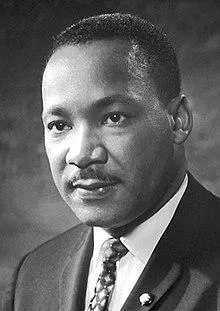
Martin Luther King Jr, American reverend, activist and prominent leader in the American civil rights movement, was someone who refused to be a victim and, using his power with transparency, became a true leader for his community.
Martin Luther King Jr speaks about the relationship between love and power (90 seconds).
Personal empowerment
“Whatever the problem, community is the answer. Whatever the need, community is the answer. Because that’s where we can rediscover how good we are, how good we can be when we’re together.” — Margaret J. Wheatley
We are living in a time of planetary overshoot. Humanity is depleting the planet’s resources faster than they are being replenished, leading to a huge loss of wilderness and wildlife and to the widespread collapse of the systems that support life.
For some people, this is a time to take urgent action to halt the destructive forces at work in the world. They dismantle pipeline-building machinery, march for Black Lives, and protect sacred water sources from exploitation and poison.
For others, it’s a time to build an alternative culture as fully and joyfully as possible: to design and inhabit ecovillages and cooperative houses, to plant urban gardens, to learn how to get along with each other, to play music, build natural homes, generate our own power and raise delighted children.
And for many, it’s a time to realise how crucial it is to learn stillness, mindfulness, alert attentiveness, insight and wisdom. For such people this needs to come before all the other forms of action, to bring about change with absolute nonviolence and compassion.
But it may be too late. We may be beyond the moment when true, meaningful, lasting change was possible. We may be experiencing a time when societal collapse is inevitable: a time of a great ending.
If we are indeed in a time of inevitable collapse, perhaps it would be foolish to pin our hopes on a brighter future. Perhaps this type of hope is bound to lead to disappointment and despair. Perhaps it’s better not to hope. Yet we are urged by an inner spirit to carry on, to keep working, keep learning, keep nurturing the creative human spirit.
Margaret J. Wheatley, in her book Who Do We Choose to Be? Facing Reality, Claiming Leadership, Restoring Sanity, argues that collapse does not need to engender despair. In fact, she believes that hoping for the impossible is what leads to despair, and that instead we need to strive to become ‘warriors for the human spirit’. In these times of great suffering, we will be needed to nourish each other and to support human creativity, generosity and courage. We can create islands of sanity that nurture what is best in us.
In fact, whether we are facing inevitable collapse or whether a better world is right around the corner, we will still be taking the same actions. We will still be spurred on by our inner spirit to develop our inner strength, to halt harmful actions and to build better societies. Whatever you believe about where we’re heading, your participation in standing up for human and natural resilience is deeply needed.
The world needs us as leaders. We all need each other to step into full creative power. And we need it now.
Repressive power versus creative power
Repressive power has its roots in a worldview based on fear and distrust. When we become trapped in the story of separation, it leads us to act based on a set of false assumptions. These assumptions are so prevalent in global culture that repressive power seems to be the more sensible choice. Have you heard anyone tell you one of the following elements of this story recently, to defend acts of aggression or repression?
- There is not enough for everybody on this planet.
- The world is made up of separate entities; we are separate from each other and also separate from ‘nature’ or ‘the environment’.
- Life is a struggle for survival in which only the fittest (rather than the most fitting) will win.
- Being sensible means doing things we do not wish to do.
- Defences are needed for us to survive in this hostile environment, or else others will take advantage of any weakness we show.
However, thinking we are separate entities that need to protect ourselves at the expense of others does not work. We need to reconnect to the fundamental biophysical truth of our interbeing. Only then can we become healthy participants in a healthy environment and healthy communities.
Creative power is using our individual wisdom and beauty to enhance the process of life. It is not a property we own but rather a process that we open up to as integral parts and participants. This process of life, evolving and diversifying, is the ultimate creative process on Earth and intimately linked with the evolution of the universe. The source of all our creative agency comes from our interbeing with the creative process of life and cosmic evolution. Below are some assumptions that benefit the growth of creative power.
- Our planet is, in essence, a place of abundance and plenty if wisely managed.
- Life is continuously offering us the best opportunities for growth.
- Viable solutions are those that satisfy the needs of all those involved, leading to win-win solutions; these are always possible.
- Viable solutions are based upon respect for the needs of all beings that live on our planet.
- Humans have the same basic needs all around the world (food, shelter, meaningful work, love and respect, among others).
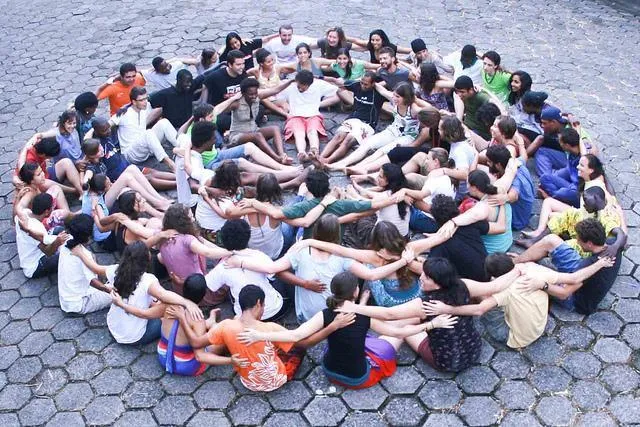
The Warriors Without Weapons programme is an example of how to use our power in a creative way, even in the most difficult situations.
The dynamics of power
“To experience empowerment, we must act on a sense of self worth, value and give voice to our own needs, and give equal validity to our own needs as to others. As we develop a sense of empowerment, we begin to discover that a conflict of needs actually can present us with a creative challenge to imagine solutions that can empower all parties involved.” — Judy Lightstone
Throughout our lives, human beings experience situations where power is present in different ways. Sometimes we feel powerless and dependent on people more powerful than we are (victim). Sometimes we feel powerful and may abuse other people, consciously or unconsciously (persecutor). Finally, we might witness abuses suffered by others and try to help (rescuer).
| Role | Typical attitudes and behaviours |
|---|---|
| Persecutor | “It is all your fault.” Sets strict limits unnecessarily. Blames. Criticises. Keeps the victim oppressed. Is mobilised by anger. Takes a rigid, authoritative stance. |
| Rescuer | “Let me help you.” Rescues when they don’t really want to. Feels guilty if they don’t rescue. Keeps the victim dependent. Gives permission to fail. Expects to fail in rescue attempts. |
| Victim | “Poor me.” Feels victimised, oppressed, helpless, hopeless, powerless, ashamed. Looks for a rescuer who will perpetuate their negative feelings. If they stay in the victim position, they will block themselves from making decisions, solving problems, pleasure and self-understanding. |
The Power Triangle.
When we enact one of these three roles (victim, aggressor or persecutor, and rescuer) in a group, family or organisation, we create a dynamic that Stephen Karpman called the ‘Drama Triangle’. This dynamic is present in many groups and is a frequent source of tension and dysfunction in most people’s lives. But it doesn’t have to be that way.
A five-minute video on the three roles in the Karpman Drama Triangle, how to identify the role you typically slip into, and how to get out of it.
It is not rare for a person to play all three of these roles in different situations. However, for most people it is easy to remember occasions when they felt like powerless victims, and more difficult to think of a situation where they may have hurt somebody. Our tendency is to think that we don’t have any power; power always seems to be in other people’s hands, and therefore we think we cannot abuse anybody: we can only be the innocent victims.
Leaving behind this sense of victimhood is the first and very necessary step in the process of personal empowerment. By changing attitudes and learning to see the past differently, a person can develop a creative attitude towards life.
With hard work and a change in attitude, the Power Triangle and its roles can be transformed.
- The persecutor, by becoming aware of rank and learning to use it with transparency, can become a challenger and a leader, using power for collective well-being and encouraging others to learn and grow. Instead of using attacks or threats, they communicate firmly but fairly. They give clear reasons for their own choices and respect the boundaries of others.
- The victim becomes a survivor or creator. They begin claiming their power, seeking ways to meet their own needs, and finding things that are working out well for them. Opposition, criticism, revenge and anger are transformed into constructive action for the good of all.
- The rescuer stops trying to ‘help’ others (who, after all, don’t need to be rescued) and becomes a facilitator, coach, teacher or elder. With humility and compassion the transformed rescuer becomes almost invisible, observing the situation, intervening only when needed, encouraging others to find solutions that work for them, and holding space for all voices in conflict.
Power, privilege and oppression
Working for social justice begins with exploring our own social identity and how we experience patterns of oppression within our society. Social power refers to having access to resources that help us get what we need or to influence people. Privilege means unearned access to social power based on membership of a particular social group. Oppression is the malicious, cruel or unjust use of power or control.
The way power, privilege and oppression are experienced has a lot to do with what social groups a person belongs to within the categories of social identity, such as gender, race, ethnicity, sexual orientation, religion, class, age and ability. (Here is a glossary of terms that can be useful for exploring and discussing these issues.)
Social groups are made up of people who identify as sharing certain physical, cultural or social characteristics within a category of social identity. For example, social groups identified by gender include cisgender and transgender women and men, non-binary people, etc.; social groups identified by ethnicity include Igbo, Roma, Sioux, Mongol, etc.; social groups identified by sexual orientation include bisexuals, lesbians, gays, heterosexuals, pansexuals, etc.; and so on.
‘Agent groups’ are social groups whose members have greater access to social power and privilege. ‘Target groups’ are groups whose access to power and privilege is limited.
We can extend the scope of this concept beyond the human realm and consider the relationship between humans and the rest of nature. Through this lens, humans are almost always ‘agents’ who hold power to make decisions and extract resources, while Nature is almost always a ‘target’, except perhaps when powerful storms or wildfires destroy human property and life, which itself is to some extent a consequence of human impact on the global climate.
The way that the aspects of our identity intersect with each other and affect our experience of oppression and power is called ‘intersectionality’. Because of intersectionality, we may feel advantages and disadvantages differently from someone who shares some, but not all, of our identifying factors. In fact, the natural world is the ultimate ‘target’ group, as it falls outside all our social intersections and is subject to the power and privilege of all humanity.

How oppression works
All forms of oppression are enforced by socialisation; that is, as we grow up, we are taught to accept an oppressive system by our parents, friends, teachers, the media and so on.
Sometimes, people in positions of power openly embrace the system that put them there; for example, a white supremacist believes white people are superior to other races and deserve to dominate them. More often, people who belong to ‘agent’ groups are unaware of the ways that they benefit from their status as agents of oppression.
In most cultures around the world, white people, men, heterosexual people and non-disabled people, for example, may not notice their unearned privilege. Instead they are taught to believe that all the good things that happen to them are due to their own hard work, ability or skill. The historical oppression and trauma inflicted on others, which has benefited members of the agent groups while bankrupting the moral power of their culture, is hidden from them in every possible way.
To make things worse, historical oppression is often perpetuated under the guise of ‘equality’; but those who have been oppressed are actually starting with fewer resources than those in agent groups, and therefore need more resources just to make the situation truly equitable and fair.
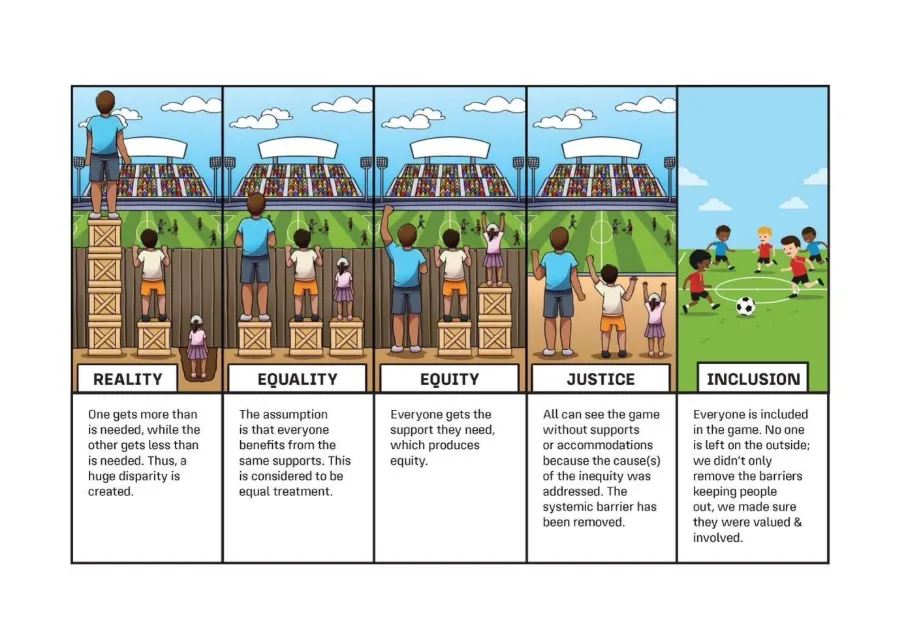
It is the challenge facing all members of groups benefiting from unearned privilege to interrogate that privilege and to attempt not to enact it or to cause harm to others because of it. It is not fair for people in positions of privilege to expect those in target groups to educate them or to tend to their feelings of guilt, defensiveness or avoidance when they are experiencing ‘white fragility’ or ‘male fragility’. At the same time, we all lose opportunities for collaboration and solidarity when ‘cancel culture’, shaming, blaming and finger-pointing cause deep rifts among those who could be working together for justice.
Instead we can recognise that we all suffer when anyone is oppressed, and we are all bound in the necessity for mutual liberation.
As members of marginalised or ‘target’ groups, we can seek healing from our trauma, refuse to accept oppression or abuse of power, speak truth with courage, and extend compassion when we can to those who are unknowingly benefiting (and sometimes suffering deeply) from an oppressive structure.
As members of ‘agent’ groups, we can strive to recover from our ‘system blindness’ so that we can see the oppressive systems around us. We can be allies and accomplices: allies who stand beside marginalised individuals or groups, and accomplices who work to dismantle the systems and structures that oppress those individuals and groups, and whose work is directed by stakeholders in the marginalised groups.
Working with differences in rank and privilege
‘Rank’ means the power we have relative to one another in relationships, groups, community and the world. Almost everybody has some kind of rank with the associated privileges, but we may not be aware of them, especially the ways we ‘outrank’ others.
The unconscious use of rank or power can have unexpected consequences and be the cause of many conflicts. When people assume that everyone has the same access to power, those with less access to power can become furious. This lack of awareness perpetuates conflict and blocks potential solutions.

To facilitate conflicts due to rank, it is necessary to be attentive, to empathise, and to try to recognise both where the power lies and the oppressed feelings of all parties. Only by supporting everyone to discover their own innate power in themselves, to see that oppressive systems harm everyone by blocking opportunities for connection, and to dismantle or disarm unfair systems, can a lasting peace be consciously created.
We cannot hide our rank or get rid of it, but we can use it consciously for the well-being of the whole group. If we use our power with transparency and with openness to people’s feedback when they experience harm from our actions, we can prevent power abuses.
Let’s look at the types of rank so that we can better understand our own access to power relative to that of others.
Types of rank
We can consider four different types of rank: social, contextual, psychological and spiritual.
- Social rank is the social status one receives based on what the mainstream culture values and supports. Some factors that determine social rank, as explored above, are gender, race, religion, health, class, age and sexual orientation. People with social rank are rarely aware of it. For example, in most parts of the world, a person with white skin experiences high social rank and privileges without realising it.
- Contextual rank is the rank given by a community to certain positions of power. Teachers, parents, bosses and leaders of organisations all have structural rank, and people tend to listen to what they have to say. Students, children, workers and newcomers to a group or community have less structural rank. Contextual rank is fluid, so that when we move to another context, we can be seen and valued differently.
- Psychological rank is related to how we feel about ourselves and includes how we weather our childhood traumas. Good self-esteem brings higher psychological rank than depression and loneliness, so personal development and ‘inner work’ which cultivates self-awareness and the confidence to stand strong in the face of stress, tension and social crises increases psychological rank.
- Spiritual rank is related to how close we feel to some deeper source of meaning. This connection to an energy greater than ourselves sustains us in difficult moments. People with spiritual rank are community builders; they have a magnetic ability to bring groups together. They radiate a sense of well-being.
The Wheel of Power/Privilege shows, for each category of identity, the positions closest to power at the centre and the most marginalised at the edge:
| Category | Closest to power | Most marginalised | |
|---|---|---|---|
| Citizenship | citizen | documented | undocumented |
| Skin colour | white | different shades | dark |
| Formal education | post-secondary | high school education | elementary education |
| Ability | able-bodied | some disability | significant disability |
| Sexuality | heterosexual | gay men | lesbian, bi, pan, asexual |
| Neurodiversity | neurotypical | neuroatypical | significant neurodivergence |
| Mental health | robust | mostly stable | vulnerable |
| Body size | slim | average | large |
| Housing | owns property | sheltered or renting | homeless |
| Wealth | rich | middle class | poor |
| Language | English | learned English | non-English monolingual |
| Gender | cisgender man | cisgender woman | trans, intersex, non-binary |
Wheel of Power/Privilege by Sylvia Duckworth, adapted from ccrweb.ca.
Compassionate communication
“What I want in my life is compassion, a flow between myself and others based on a mutual giving from the heart.” — Marshall Rosenberg
To communicate from the heart is essential in building community. To do this we must strengthen our ability to relate compassionately to ourselves and others. Having empathy for ourselves is the first step. Taking personal responsibility for how we act and respond to others will come more easily if we can practise extending empathy and love to ourselves first. Listening deeply to others fosters respect, attentiveness and empathy. Through living mindfully, and speaking from that same source with loving kindness, we generate generosity and create trust among people.
The ideas and practices described here are strongly related to Nonviolent Communication and also inspired by Buddhist teachers such as Thich Nhat Hanh.
A good starting point is to become aware of our feelings and learn to understand them as indicators of whether our needs are being met or not. We can then express our feelings without blaming or attacking, which will minimise the likelihood of others reacting defensively. Communicating in a compassionate way, learning the art of expressing careful observations free of evaluation and judgement, flows from those beginnings.
Through learning to identify our own deeper needs and those of others, we can clearly articulate what we wish for. This means making clear requests without demanding that they be met. All human beings have the same basic needs, and this makes it possible to connect with each other and to find mutual understanding at a deep level. We discover the beauty of our own compassion by focusing on what is being observed, felt and needed, rather than on diagnosing and judging. This is the key to creating a flow between ourselves and others, based on a mutual giving from the heart.
Once we become able to receive critical and hostile messages without taking them personally, giving in, responding defensively out of hurt feelings, or losing self-esteem, we know we’re on the right track.
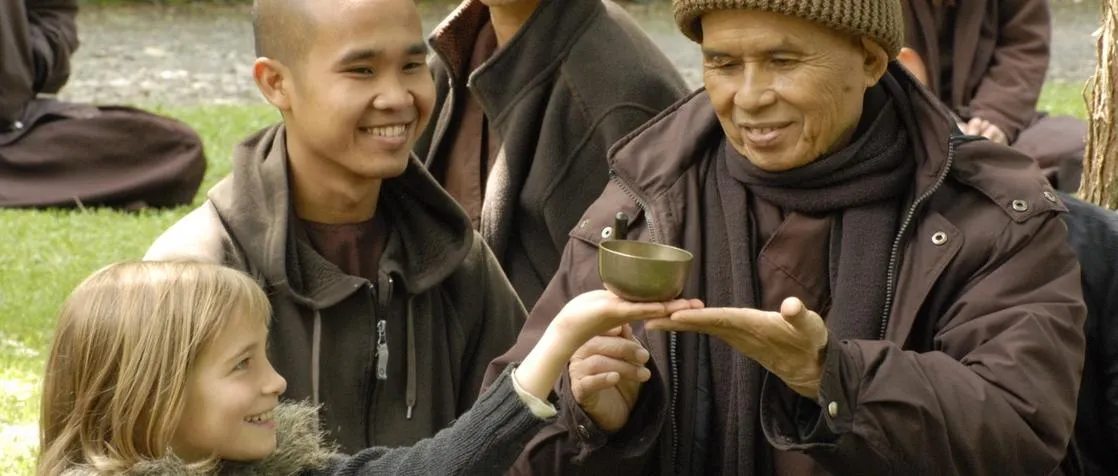
Buddhist monk Thich Nhat Hanh was very active in the peace movement, sponsoring retreats for Israelis and Palestinians and encouraging them to listen to and learn about each other. He gave speeches urging warring countries to stop fighting and look for nonviolent solutions to problems, and wrote several books about meditation, mindfulness and peace.
“Nonviolent Communication is a powerful tool for peace and partnership. It shows us how to listen empathically and also communicate our authentic feelings and needs.” — Riane Eisler
Compassionate communication (also known as Nonviolent Communication or NVC) is a way of hearing our own deeper needs and those of others. NVC, according to the Center for Nonviolent Communication, can be seen both as a spiritual practice and as a set of skills that help us create life-serving families and communities. It helps us identify our shared values and needs, and encourages us to use language that increases goodwill while avoiding language that contributes to resentment or lowers self-esteem.
Compassionate communication focuses our attention on compassion as our motivation, rather than fear, guilt, blame or shame. It emphasises taking personal responsibility for our choices and improving the quality of our relationships, and is effective even when the other person or group is not familiar with the process.
Compassionate communication is based on a few simple principles that we can apply when giving and receiving feedback. According to Marshall B. Rosenberg, creator of NVC and author of Nonviolent Communication: A Language of Life, these basic principles are:
- observe without evaluating (judgement);
- learn to identify and express your feelings;
- take responsibility for your feelings, acknowledge your needs;
- make requests consciously;
- receive empathically.
Observe without evaluating
The first principle of NVC entails the separation of observation from evaluation or judgement. When we combine observation with evaluation, others will hear criticism and resist what we are saying. This is what happens when we use words like ‘always’ or ‘never’, which exaggerate our observation of what someone else has done.
Observations must be specific to time and context. Instead of saying, ‘You are always late,’ we can say, ‘You were late to our last three meetings.’
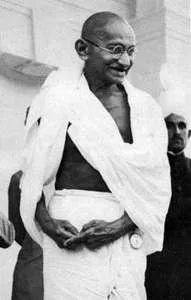
The concept of nonviolence (ahimsa) and non-resistance has a long history in Indian religious thought. Gandhi was the first to apply it in the political field on a huge scale.
Identifying and expressing our feelings
The second principle of NVC is to learn to develop a vocabulary of feelings and needs that allows us to clearly and specifically name or identify our feelings. Allowing ourselves to be vulnerable by expressing our feelings is a way to connect better with one another and can help resolve conflicts. It is important to distinguish the expression of actual feelings from words and statements that describe thoughts, assessments and interpretations of others.
Using the word ‘feel’ in the sense of ‘believe’ doesn’t mean we are expressing a feeling. For example, in the sentence ‘I feel that you are wrong’, we are giving an opinion, not expressing a feeling.
If someone says, ‘I feel misunderstood’, they are also not expressing a feeling. The word ‘misunderstood’ indicates an assessment of the other person’s level of understanding, not a feeling. In this situation, the speaker may be feeling anxious, annoyed or some other emotion.
Finally, words like ‘attacked’, ‘ignored’, ‘cheated’, ‘put down’ and ‘pressured’ express how we interpret others, rather than how we feel. Here is a list of such words that can be judgements masquerading as feelings. It takes daily practice of paying conscious attention to notice whether we are communicating genuine feelings or have the habit of cloaking our opinions, assessments and interpretations in a language of feeling.
The NVC Tree of Life: three focus options for connection
| Focus | What it means | Prompts |
|---|---|---|
| Self-connection: humanising (the roots) | Opening my heart to what’s alive in you | (Judgements?) Could they be feeling…? Could they be needing…? |
| Self-connection: self-empathy (the roots) | Opening my heart to what’s alive in me | (Judgements?) How am I feeling? What am I needing? |
| Empathy (verbal or non-verbal) | Connecting with what’s alive in you | (When you see/hear…) Are you feeling… because you need…? (Would you like…?) |
| Self-expression | Communicating what’s alive in me | When I see/hear… I feel… because I need… Would you be willing to…? |
Which option do I want to choose next: empathy or self-expression? New strategies arise from connection, sometimes without words.
Designed by Inbal Kashtan at BayNVC, the ‘NVC Tree of Life’ shows that the root of nonviolent communication is self-connection, which branches out into empathy and self-expression.
Taking responsibility for our feelings
The third principle of NVC is the acknowledgement of the needs behind our feelings. What others say and do may be the stimulus, but it is never the cause of our feelings. Instead of saying, ‘I feel hurt because you said you don’t love me’, which is a way of avoiding responsibility for what one is feeling and a way of blaming the other person, one could say, ‘I feel hurt because I need love’, connecting the feeling to the need. The more directly we can connect our feelings to our needs, the easier it is for others to respond compassionately.
When we express our needs indirectly through the use of evaluations or interpretations, others are likely to hear criticism. When people hear anything that sounds like criticism, they tend to invest their energy in self-defence or counter-attack. If we are wishing for a compassionate response from others, it may be useful to connect our feelings more directly to our own needs.
To take responsibility for our feelings, we first have to know what our real needs are.
| Level | Needs |
|---|---|
| Self-actualisation | morality, creativity, spontaneity, problem solving, lack of prejudice, acceptance of facts |
| Esteem | self-esteem, confidence, achievement, respect of others, respect by others |
| Love and belonging | friendship, family, sexual intimacy |
| Safety | security of body, of employment, of resources, of morality, of the family, of health, of property |
| Physiological | breathing, food, water, sex, sleep, homeostasis, excretion |
Maslow’s hierarchy of needs, from the top of the pyramid to its base.
More on needs:
Making requests consciously
The fourth principle of NVC is about making conscious requests, avoiding vague, abstract or ambiguous phrasing, and using positive action language by stating what we are requesting rather than what we are not.
Requests are received as demands when listeners believe that they will be blamed or punished if they do not comply. We can help others trust that we are requesting, not demanding, by indicating our desire for them to comply only if they can do so willingly.
Receiving empathically
An important aspect of empathy is a respectful understanding of what others are experiencing. Instead of offering empathy, we often have a strong urge to give advice or reassurance and to explain our own position or feelings. Empathy, however, calls upon us to empty our minds and listen to others with our whole being.
In Nonviolent Communication, no matter what words others may use to express themselves, we simply listen for their observations, feelings, needs and requests. Then we may wish to reflect back, paraphrasing what we have understood. We stay with empathy, allowing others the opportunity to express themselves fully before we turn our attention to solutions or requests for relief.
NVC suggests that our paraphrasing takes the form of questions that reveal our understanding while eliciting any necessary corrections from the speaker. Questions may focus on:
- what others are observing: Are you reacting to how many evenings I was gone last week?
- how others are feeling and the needs generating their feelings: Are you feeling hurt because you would have liked more appreciation of your efforts than you received?
- what others are requesting: Do you want me to tell you my reasons for saying what I did?
It’s important to recognise that Nonviolent Communication (NVC) must never be understood or taught merely as a set of techniques or scripts, but as a cultivated attitude of the heart aimed at empathy and understanding. It is not a pattern to memorise, but an orientation and daily practice to develop and nurture.
Deep listening
The heart of good communication is a simple but profound capacity to listen. Listening requires that we not only hear the words, but also embrace, accept and gradually let go of our own inner clamouring. We cannot truly listen if we are already reacting to and judging what is being said, while it is being said. As we explore deeper listening as a path towards understanding, we discover that it is an expansive activity which allows us to perceive more directly the ways we participate in the world around us.
Listening seems to be a simple activity, but it is actually very difficult and requires commitment and practice. J. Krishnamurti, the Indian philosopher, once said, “The ability to observe without evaluating is the highest form of intelligence.”
To listen, then, is to develop an inner silence, which is not a familiar habit for most of us. We often pay great attention to what is going on inside us, when actually what is required is a kind of disciplined self-forgetting: a letting go of the constant inner commentator and judge of what or who we are listening to. We must create a space in which listening can occur.
Some elements of active listening
- Liberate the mind. Truly efficient communication begins with active listening, and to listen, in addition to applying our senses, we have to liberate our mind from our preoccupations, prejudices, assumptions and so on. Our mind is so full of ‘things’ that we are unable to listen to and assimilate what others try to tell us. Only a deep inner silence allows us to be fully open to other people’s voices.
- Empathise. Listening is not only hearing words, but being open, accepting and empathising. Besides trying to understand what people are saying, the listener needs to pay attention to their own perceptions and emotions and to the context of the speaker. Effective listening requires humility and resistance to lecturing others, looking instead for connections at the level of shared experience.
- Ask and reformulate. Ask to clarify things, become more conscious, and allow wisdom to emerge from the speaker. Inquire into their emotional state. Ask to check whether your understanding of what the speaker is saying is correct. Repeat in a positive way without judging. Reformulate without adding your own interpretation and without looking for the answers you desire.
Some elements of deep listening
- Honour people’s boundaries. Deep listening begins with respect. To respect means, among other things, to honour people’s boundaries: to be sensitive to them without trying to push them, and without wanting to adapt or convert them to our own ideas and beliefs. To respect is also not to distance ourselves from people when they say or do something we don’t like. To respect is to understand that everybody can teach us something.
- See your teacher in every person, in every situation. From every person and every situation you can learn something. Your listening will be deep when you ask yourself what lies beyond your feelings, your pain and your anger. What can you learn from what happened, and who and what is teaching you?
- Accept difference. Everything that happens to us is part of a whole that we may not be aware of, or that we don’t fully understand. We listen deeply when we are humble and accept that we don’t have the whole truth and therefore need to open up to other people’s truth.
Four levels of listening
| Level | Where it comes from | What happens | Result |
|---|---|---|---|
| Listening 1: downloading | From habits | Habits of judgement | Reconfirming old opinions |
| Listening 2: factual | From outside | Noticing differences, with curiosity (open mind) | Disconfirming (new) data |
| Listening 3: empathic | From within | Emotional connection, with compassion (open heart) | Seeing through another person’s eyes |
| Listening 4: generative | From source | From the future wanting to emerge, with courage (open will) | Connecting to an emerging future whole: shift in identity and self |
Four levels of listening, Presencing Institute. Source.
Suspending
Suspending is a concept introduced by the physicist David Bohm, extensively developed in his book On Dialogue, and basically means two things:
- Suspending is to put our ideas and opinions in parentheses, separating them from the truth, and thus leaving space for other ideas and opinions.
- Suspending is observing and recognising our thoughts and feelings when they arise without necessarily having to act on them. For instance, when somebody says something that makes us angry, instead of expressing our anger outwardly and creating a rather predictable escalation of tension, we may merely observe how this energy moves in our body and try to understand where it is taking us and what it is trying to tell us.
- Suspension of judgement, decision-making and status.
- Listening with empathy, for understanding, showing you care.
- Discovery: uncovering and sharing hidden assumptions in yourself and others.
Suspending is difficult because we tend to identify with our thoughts, to think that we are what we say. So when somebody criticises or attacks our opinions, we feel personally attacked. With this in mind, giving in feels like suicide; it feels like we are being asked to renounce our greatest values and beliefs.
Suspending is also difficult because if we are too attached to the image we have built of ourselves, we may take a stand against anybody questioning or challenging this image. At the extreme, we may live in fear of our image being attacked or destroyed at any moment.
J. Krishnamurti in conversation with the physicist David Bohm on perception and intelligence.
Giving and receiving feedback
“The only way to avoid criticism is to do nothing, say nothing, be nothing.” — Elbert Hubbard
One of the most difficult communication skills to learn is how to handle critical or differentiating feedback. Whether we are giving it or receiving it, there is both opportunity and danger. Properly handled, critical or differentiating feedback becomes constructive and provides information on what’s working and what’s not.
However, people tend to like to hear what is consistent with their own views and to resist ideas contrary to these. One of the reasons why we tend to resist critical feedback is that a good part of our self-image is based on how others view us, so when we find out that someone sees us in a dim light, we may feel devastated.
However, in today’s rapidly changing environment, our ability to adapt, change and grow as a result of feedback is increasingly important. We must learn to accept and welcome critical feedback as a vehicle for learning and growing.
Pause for a minute to ask yourself whether a true friend should always agree with you no matter what, or whether true friendship is also about offering a mirror to each other. Offering a mirror supports us to see where we are stuck in old patterns that no longer serve, where we keep doing the same thing yet expect a different outcome, and where we have decided to close down rather than to open up. In this busy world the gift of constructive critical feedback and ‘offering a mirror’ is precious, as so often it is easier to avoid, judge or dismiss a person.
A useful book on the subject is Giving and Receiving Feedback: Building Constructive Communication by Patti Hathaway.
The fine art of feedback
Giving and receiving feedback is a way to improve interpersonal relationships and ensure the smooth functioning of organisations. As the practical visionary Miki Kashtan writes, “Feedback is the learning mechanism that exists in nature and in all human systems if it’s not turned off.” (See her blog post Eliminating feedback loops at our peril.)
In complex, dynamic systems like human beings or social collectives, which are designed to rely on strong feedback mechanisms in order to function smoothly and reach optimum health, the lack of mechanisms for giving and receiving feedback can cause serious harm. We need to know when things are working well, and when they are not, or else we die. We, and our groups, literally need feedback in order to survive.
Yet feedback is tricky. Unfortunately many of us are socialised in systems that rely on punishment and reward to coerce individuals to follow the rules. This can make us hesitant to tell each other when things don’t seem to be going well. It requires all the self-awareness, empathy and communication skills we can muster.
Fortunately, if we are part of a group, we can set up systems that create regular opportunities for giving and receiving feedback, with the support and care of other community members, and this can make the work easier. Even groups as small as a family can have a round of ‘goods and griefs’ or ‘roses and thorns’ at their weekly house meeting.
Setting up regular feedback sessions and building them into your group’s activities can support people to find the courage to offer the group, and each other, the gift of feedback.
Along with this, your group may need to consciously build an understanding that the purpose of feedback is not to criticise, blame or change someone, but to contribute to another person’s capacity to support a shared purpose.
Miki Kashtan, of the Center for Efficient Collaboration, writes and teaches about communication, feedback, and how to design effective groups. Her books include Reweaving Our Human Fabric: Working Together to Create a Nonviolent Future.
When setting up collaborative feedback systems for your group or community, Miki Kashtan recommends that organisations consider five components:
- Who: who gives feedback to whom? In a self-managing team, feedback will flow openly throughout the group, rather than solely top-down as in a hierarchical organisation.
- When: when is the feedback given? Every week? After a major project? At the end of each meeting? You decide.
- Criteria: what are the purposes, values and relationships on which feedback will be sought and offered? These are the things that you are caring for together, the things whose health you naturally want to track.
- Purpose: how will this feedback support an individual, a relationship or a team to reach a shared purpose most effectively?
- Process: exactly what process will you follow in offering and receiving the feedback? For example, it can be useful for those offering feedback to be asked to share (a) specific observations, so that the person receiving feedback knows what’s being talked about; (b) why this matters in terms of values, purpose, etc.; and (c) specific suggestions for what could be done in this area that might work better.
Offering feedback
One way to let someone know how their actions affected you is to use the sequence we discussed earlier, in the section on Nonviolent Communication: observation, feeling, need, request. First describe what you actually observed, using specific, factual information. Next, if you wish, express what you are feeling. Then connect this to needs or values that you have or that you share with the other person. Finally, if you want, you can make a request of the other person, being prepared, of course, to hear ‘no’ if they are unable or unwilling to do what you are asking.
It’s crucial to understand that if we are holding right/wrong ideas, or if we’re offering feedback in order to heal, to be seen, or to share a personal trigger, we aren’t ready to offer it; we need to pause and reflect first, seeking self-empathy and empathy for the other person.
Feedback that is genuinely intended to improve the system or the culture that both people are part of, and that is offered as a gift to the other person and to the community, is likely to be received and integrated well. Other feedback is likely either to generate conflict or to fail to be heard at all.
In a sense all feedback is ‘positive feedback’. Feedback can be about something that contributed to our well-being, or something that did not. It’s all feedback, and it’s all good. After all, the real reason for feedback is so that we have the information we need to stay healthy and alive. Pain serves a very valuable purpose: ask anyone who has burned their finger on a hot stove. It may not be fun, but we need it in order to survive and thrive.
Steps for giving feedback
- Find out whether the person is willing to receive your feedback, and whether this is a good time. If not, see if another time or context would work better.
- If it’s a formal feedback session, invite the person to give their own self-feedback or self-evaluation first.
- Offer feedback, with specific observations, why it matters, information about emotional effects if relevant, suggestions, and time for seeking to understand the person receiving the feedback and offering them empathy.
- Make an action plan for moving forward.
Receiving feedback
Hearing feedback about something we’ve done that has harmed someone else, or damaged something we care about, is not easy. It can hurt. To make matters worse, the person giving us feedback may not know how to do it in a way that is useful to us; they might have shared something laden with criticism, judgement, insults and blame.
Under such conditions, we may resist all feedback and end up starved of the kind of information we need in order to learn and grow.
One way to handle this paradox is to build our self-acceptance and empathy. We need to be able to rest in our knowledge that other people’s anger doesn’t mean we are fundamentally broken, worthless or unlovable. When we know this, we’ll be able to hear the nugget of useful information in someone’s outraged rant.
We can also practise reducing our defensiveness by asking those close to us for feedback, and then periodically pausing if we feel defensive, to give ourselves empathy or ask the other person to listen to us empathically.
Finally, we get to decide what to do with the feedback we are receiving. We need to keep our perspective, avoid self-judgement, and attempt to see the feedback in the context of the value or purpose we share with the person giving us the feedback. If the feedback is not in an area we want to work on, we don’t have to change anything. If it is, we can choose what we want to do with it. Maybe we want to work to change our habits or behaviour, perhaps with the support of the person offering the feedback, or someone else close to us. And along the way, we’ll want to monitor any self-judgement or self-deprecating thoughts that could sabotage us or cause us to sink into despair.
Talking circles: a practice for inclusive youth participation
Talking circles are a simple and powerful facilitation practice that creates a safe space for dialogue, listening and collective reflection. Used in community work, education and youth participation processes, circles help groups move beyond debate and towards shared understanding. In a circle, every participant has the opportunity to speak, listen and contribute to the collective process.
For youth work and participatory projects, talking circles can support trust-building, inclusive decision-making, conflict resolution and reflection. Because the structure is simple and adaptable, it can be used with small or large groups and in many cultural contexts.
Roots in native culture
Talking circles originate in the traditions of many Indigenous peoples of North America and Africa, including First Nations communities. In these cultures, the circle is more than a meeting format: it represents values such as equality, respect, balance and the interconnectedness of all people.
The circular form reflects an important symbolic idea: no one is placed above others. Everyone can see each other, and each voice has equal importance. Decisions in traditional circles were often made through dialogue and consensus rather than competition or majority voting.
A common feature of traditional talking circles is the talking stick. This can be any object with meaning (a stone, feather, stick or another inspiring item). Only the person holding the talking piece speaks, while others listen respectfully. The talking piece moves around the circle, allowing each person the opportunity to contribute.
Listening in this context is considered just as important as speaking. Participants are encouraged to listen deeply, without interrupting or preparing a response. This practice promotes reflection, empathy and mutual respect.
While modern facilitators adapt talking circles for educational or community settings, it is important to acknowledge their cultural origins and approach the method with respect. The aim is not to copy a ritual but to learn from principles such as equality, attentive listening and collective wisdom.
A space for everyone
One of the main strengths of a talking circle is that it creates a space where everyone has the opportunity to participate. In many group discussions, some people speak often while others remain silent. Power dynamics, confidence levels or social roles may influence who feels comfortable expressing their ideas. The circle structure helps balance these dynamics.
Because the group sits in a circle and the speaking order is organised, each person has a chance to speak without interruption. Participants may also choose to pass if they prefer not to speak. This flexibility respects different comfort levels while still ensuring that everyone has the opportunity to be heard.
Talking circles support several important elements of participatory practice:
- Equality. All participants share the same physical and symbolic position in the circle. This reduces hierarchical dynamics and encourages mutual respect.
- Active listening. The structure encourages participants to truly listen rather than debate. This can deepen understanding between people with different perspectives.
- Reflection. The pace of a circle is usually slower than a typical discussion. This allows time for thoughtful responses rather than quick reactions.
- Emotional safety. Because interruptions and direct criticism are discouraged, the circle can become a safer environment for expressing personal experiences, ideas or concerns.
- Collective intelligence. When participants listen carefully to each other, the group can build shared understanding and generate more thoughtful solutions. The goal is not to win an argument but to explore perspectives together.
For young people, especially in participatory projects, this method can strengthen confidence, empathy and group cohesion.
How to run a talking circle
Facilitating a talking circle does not require complex tools, but it does require careful attention to the atmosphere and structure of the conversation. The facilitator’s role is to hold the space and guide the process rather than dominate the discussion.
- Prepare the space. Arrange chairs in a circle so that everyone can see each other. Remove tables or barriers if possible. The environment should feel welcoming and calm. Choose a talking stick that participants will pass around the circle. This object signals whose turn it is to speak.
- Introduce the purpose. Explain the intention of the circle and the basic principles, for example: speak from personal experience; listen without interrupting; respect different perspectives; you may pass if you prefer not to speak. Clarifying these guidelines helps participants feel safe and understand the process.
- Start with an opening question. Begin with a simple and accessible question to invite participation, for example: ‘What motivated you to join this project?’, ‘What does youth participation mean to you?’ or ‘What is one challenge young people face in being heard?’ The talking stick moves around the circle, and each person has the opportunity to respond.
- Facilitate the flow. As facilitator, your role is to maintain the rhythm of the circle. Encourage participants to keep their contributions concise so that everyone has time to speak. If the topic requires deeper discussion, the talking piece can circulate several times. Each round allows participants to build on previous reflections.
- Encourage respectful listening. Remind participants that listening is as important as speaking. Encourage them to focus on understanding others rather than reacting immediately. This approach helps prevent debate and instead promotes reflection and empathy.
- Close the circle. At the end, offer a final round where participants can share a takeaway, feeling or insight from the discussion. Closing the circle intentionally helps participants integrate the experience and acknowledge the collective process.
Circles at Grain&Sens Ecovillage in France
In the community of Grain&Sens Ecovillage in Ardèche, France, talking circles are at the foundation of the common culture that supports community life and collective governance.
The ecovillage brings together several families (12 to 20 people) who share a vision of living cooperatively, cultivating the land with permaculture, and developing educational activities in connection with nature.
In this context, circles provide a structured space where residents and visitors can express their feelings, needs and ideas while being listened to with respect.
During community meetings, reflection times or Erasmus+ youth activities, participants sit in a circle and speak one after another, often guided by facilitation methods inspired by nonviolent communication and collective intelligence. Every meeting starts with a talking circle about people’s emotional states; then the whole meeting runs with different methods that use the circle (such as decision by consent). Every month, a ‘Peace Circle’ takes place, gathering most of the community to share their emotions and what bothers them, and in this way to create a peace-building culture.
These circles help regulate tensions, strengthen trust, and ensure that every voice can be heard in the decision-making process. They also reflect the values of the ecovillage: cooperation, mutual care, and awareness of the relationships between people and their environment.
An invitation to run a talking circle in your community
Talking circles are a powerful yet simple practice for fostering inclusive dialogue and meaningful participation. By creating a structured space for listening and sharing, they help groups move beyond competition and towards collective understanding.
For youth participation projects, circles can strengthen trust, encourage quieter voices and support collaborative decision-making. When facilitated with care and respect for their cultural origins, talking circles become an effective tool for building more inclusive and reflective communities.
Power dynamics and compassionate communication
Your progress is saved in this browser. Register to save it on every device.
Text © IN.PACT partnership, shared under CC BY-SA 4.0. Images, videos and quoted works belong to their authors and are not covered by this licence unless stated.