Lesson 1 · Module 3
Storytelling and narrative building
Use storytelling to help a group move from personal stories to a shared narrative, with a safe container, deep listening, place-based exercises and care for every voice.
The primary purpose of storytelling in participatory community facilitation is to shift from top-down, expert-driven information dissemination to community-led sensemaking, where members co-construct shared realities and grounded knowledge based on their lived experiences. This approach transforms narratives from mere data points into catalytic tools that drive collective understanding, allowing communities to uncover hidden patterns, articulate authentic feelings, and develop self-resilience against challenges like social isolation or systemic injustice.
The importance of this narrative building lies in its ability to empower participants by granting them agency over how their stories are told, thereby breaking down power imbalances and preventing the extraction of stories without context or consent. By fostering deep listening and empathy, these processes build stronger social bonds, preserve cultural heritage, and create a sense of ownership and pride that encourages active engagement and sustainable community action.
- Collective sensemaking: Stories help groups identify common values and cognitive constructs, enabling them to navigate complex systems and make informed decisions together.
- Social cohesion: Participatory storytelling performs "togetherness" by validating individual experiences, mediating dissent through positive framing, and building trust within and between diverse community groups.
- Driving change: Narratives crafted through co-creation can highlight specific issues and injustices, mobilising support and influencing policy by presenting nuanced, authentic perspectives that resonate with both internal and external audiences.
Humans weaving voices
The human operating system
Why this matters
Welcome, future facilitators. Before we dive into techniques, let's acknowledge a fundamental truth: your brain is wired for story. For hundreds of thousands of years, humans have not just told stories; we have lived them. Our social evolution, our ability to cooperate, and our capacity to learn are all rooted in narrative. When you facilitate a group, you aren't just transferring information; you are tapping into the oldest operating system humanity has ever known.
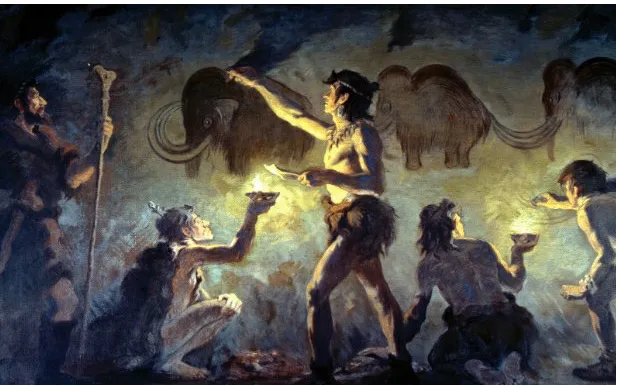
In this topic, we move away from dry theory. Instead, we will explore how to create spaces where young people feel safe enough to share their true selves. We will look at how vulnerability becomes the gateway to deep learning and how connecting our stories to the landscape fosters a culture of care and sustainability.
Your goal
By the end of this topic, you will not just understand storytelling; you will have a toolkit to:
- Create a "container" safe enough for vulnerable sharing.
- Guide groups from isolated personal stories to a woven collective narrative.
- Use nature and place as active partners in the storytelling process.
- Ensure every voice, especially those often marginalised, is heard and valued.
The evolutionary power of story
The science of connection
Humans are unique in the animal kingdom not just because we use tools, but because we use narrative to transmit complex knowledge across generations. Cognitive science tells us that when we hear a story, our brains light up in ways that raw data never triggers. We don't just process information; we simulate the experience.
How does storytelling affect the brain? When we hear a story, these areas are involved:
- Motor cortex: movement
- Emotions
- Olfactory area: smells
- Amygdala: emotional reactions
- Memories: of our own experiences
- Wernicke's area: language comprehension
Source: scientificworldinfo.com (diagram "How does storytelling affect the brain?")
For a facilitator, this means:
- Facts tell, but stories sell (and stick). If you want young people to remember a lesson on sustainability, don't give them statistics about carbon emissions. Tell the story of a local river that changed over twenty years.
- Stories build tribes. In our evolutionary past, sharing stories around a fire signalled: "I am part of this group. I trust you with my experiences." This biological imperative remains today.
Creating the container
What is a container?
In facilitation, a "container" is the emotional and psychological space you create. It is the invisible boundary that says: "What is shared here, stays here. You are safe to be imperfect." Without a strong container, vulnerability feels risky. With it, vulnerability becomes a superpower.
Building the container: practical steps
You cannot assume safety exists; you must co-create it.
- Physical set-up: If in person, sit in a circle (no tables). If online, ensure everyone has camera options but no pressure to use them initially.
- Group agreements: Do not dictate rules. Ask the group: "What do we need to feel safe sharing personal stories today?" Write their answers down. Common agreements include: "Listen without interrupting", "No fixing or advising", "Confidentiality".
- The facilitator's role: You are the guardian of the container. If someone interrupts or judges, gently remind the group of the agreements. "Remember, we agreed to listen without fixing."
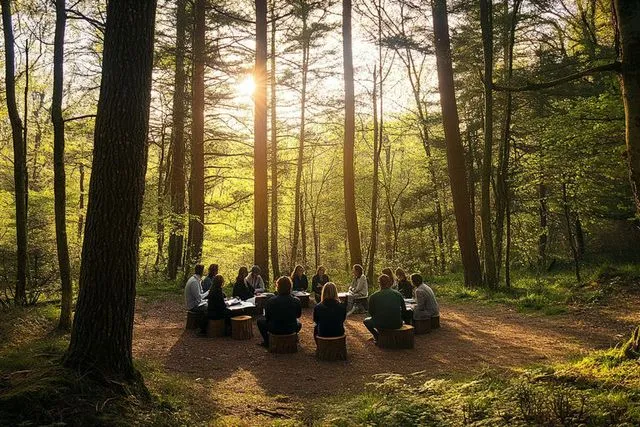
Exercise: the check-in circle
Start every session with a low-stakes check-in that invites presence.
- Prompt: "In one word, how are you arriving today?" or "Share a colour that matches your current energy."
- Why it works: It gives everyone a voice immediately, establishing the rhythm of listening and speaking.
Vulnerability: the heart of learning
The myth of perfection
Many young people (and facilitators) believe they need to have the "right" answer or the "perfect" story. This blocks connection. As researcher Brené Brown has famously highlighted, vulnerability is not weakness; it is our most accurate measure of courage. It is the birthplace of innovation, creativity, and change.
Why vulnerability matters in facilitation
When a participant shares a struggle, a fear, or a failure, they are offering a gift to the group. If the group receives it with empathy, trust skyrockets. Learning happens in the gap between "I don't know" and "Let's find out together."
"The Power of Vulnerability" by Brené Brown (TED).
In this video, Brené speaks to the value of each of our authentic selves, and how to find the courage to step into the vulnerability to find our gifts within it. This video has more than 18 million views on YouTube! Perhaps we all need some encouragement to put ourselves out there, to put our hearts on the line, to tell our stories in service to our community.
Facilitator practice: modelling vulnerability
You cannot ask for vulnerability if you are armoured up.
- Share your own stumble: Early in a workshop, share a brief story of a time you failed or felt unsure. "I remember leading my first group and forgetting the entire agenda. I felt so exposed. But the group helped me recover."
- Normalise the feeling: When someone shares something heavy, acknowledge it. "Thank you for trusting us with that. It takes courage to speak that truth."
Exercise: the "perfect vs. real" pair-share
- Ask participants to think of a time they tried to look "perfect" or "have it all together".
- In pairs, share that story for 3 minutes each.
- Debrief: How did it feel to admit the imperfection? Did it create distance or connection?
Creating a collective culture
The facilitator's stance: holding space
Listening to understand, not to reply
The most powerful tool you have is your listening. Most people listen with the intent to reply. A storytelling facilitator listens with the intent to understand and hold.
Key qualities of a story facilitator
- Presence: Be fully there. Put away phones. Maintain soft eye contact (or look at the camera lens online).
- Non-judgement: Suspend your own opinions. Your job is not to evaluate the story, but to witness it.
- Curiosity: Ask open-ended questions. "What was that like for you?" rather than "Why did you do that?"
Handling silence
Silence is not awkward; it is fertile. When a participant stops speaking, wait. Count to five in your head. Often, the deepest part of the story comes after the pause.
Tip: If the silence stretches too long and feels uncomfortable, gently ask: "Is there more you'd like to add, or shall we thank [Name] for sharing?"
Common pitfalls to avoid
- The "fixer": Jumping in with advice. "Oh, you should just…" → Stop. Ask: "Do you want advice, or just to be heard?"
- The "hijacker": Making the story about yourself. "That reminds me of when I…" → Wait. Keep the focus on the speaker first.
- The "interpreter": Analysing their story for them. "What you're really saying is…" → Trust the speaker to know their own meaning.
Culture, landscape and collective narrative
Stories live in the land
We often think of culture as something abstract, but culture is woven into the landscape. The trees, the rivers, the buildings, and the weather all hold stories. When we disconnect from our environment, our stories become rootless. When we reconnect, we create a "group culture" that is grounded and sustainable.
Repairing emotional isolation by reawakening deep nature connection: Jon Young at TEDxGrandPark (17:50).
Take a deep breath and relax: we are not getting ready for the TEDx stage. In his TEDx talk, Jon Young shares some bite-sized stories to move the audience in particular ways and to get us involved in our senses during a storytelling session.
The concept of "place-based storytelling"
This approach invites participants to see themselves as part of an ecological and historical web, not just isolated individuals.
- Inclusion angle: Indigenous and local communities have always known this. By honouring the land, we honour the diverse histories of the people connected to it.
- Sustainability angle: It is hard to destroy what you love, and hard to love what you do not know. Stories create that knowing.
Exercise: the landscape interview
- Set-up: Go outside (or look out of a window, or at a photo of a local place).
- Prompt: "Imagine this place (a tree, a building, a river) could speak. What story would it tell about the last 10 years? What has it seen? Who has passed by?"
- Action: Write or speak the story from the perspective of the place.
- Debrief: How does shifting the perspective change our relationship to the environment?
From personal to collective stories
Weaving the web
Individual stories are powerful, but collective stories transform groups. Your goal as a facilitator is to help the group see the threads that connect their unique experiences. This creates a sense of belonging: "I am not alone. My struggle is shared."
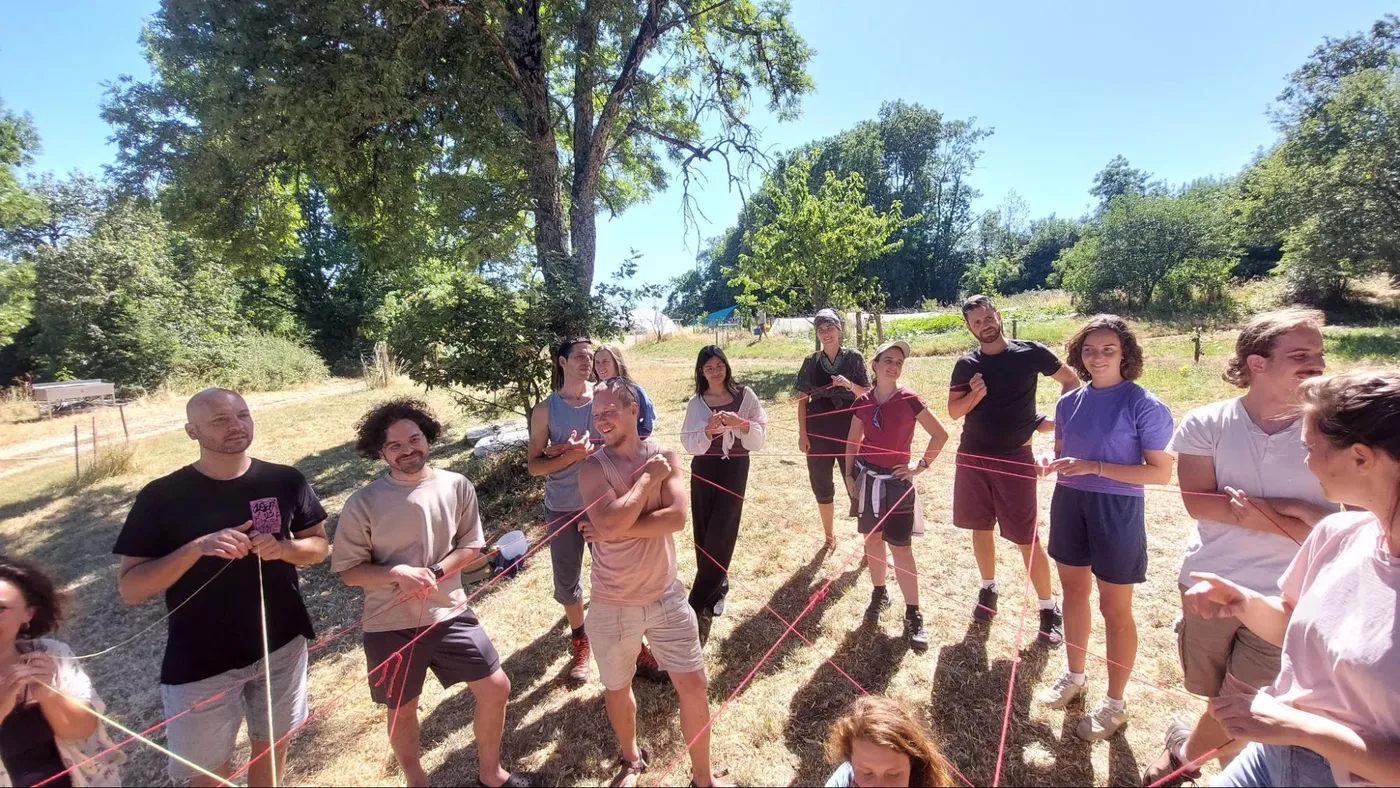
Technique: the story web
- Gather: Have the group stand or sit in a circle.
- Share: One person shares a short story or a key theme (for example, "A time I felt excluded").
- Connect: Another person who resonates with that theme says, "I connect to that because…" and shares a brief snippet of their own experience.
- Visualise: Use a ball of yarn. The speaker holds the end and tosses the ball to the connector. Continue until a web is formed.
- Reflect: Look at the web. "What do you notice? How strong is this structure? What happens if one person lets go?"
Outcome: The group now has a physical and metaphorical representation of their collective narrative. They are literally and figuratively "woven together".
Narrative archetypes: patterns that resonate
Universal patterns
While every story is unique, humans tend to organise experiences into common patterns or archetypes. Recognising these can help participants make sense of chaotic experiences.
Common archetypes for youth work
- The hero's journey: Leaving home, facing a challenge, returning transformed. (Great for migration stories or personal growth.)
- The cycle of seasons: Birth, growth, decay, rebirth. (Perfect for sustainability and dealing with loss or failure.)
- The bridge builder: Connecting two separated worlds or people. (Ideal for conflict resolution and inclusion.)
Exercise: identifying the pattern
- Ask participants to recall a significant challenge they overcame.
- Ask them to map it: Where did you start? What was the obstacle? Who helped you? How are you different now?
- Ask: "Which pattern does this fit? A journey? A cycle? A bridge?"
Why it works: It helps young people see their struggles not as random failures, but as part of a meaningful narrative arc. It gives structure to chaos.
Engagement and inclusion through storytelling
Digital storytelling for youth engagement
Blending old and new
Young people are digital natives. Digital storytelling combines the ancient art of narrative with modern tools (video, audio, social media). It amplifies voices and allows for creative expression beyond text.
Tools and formats
- Audio and podcasts: Great for introverts or those who prefer voice over video. (Tools: Anchor, Audacity.)
- Short video: TikTok or Reels style (60 seconds) for quick, impactful messages. (Tools: CapCut, Canva.)
- Photo voice: Using images to tell a story with minimal text.
Ethical considerations (crucial for facilitators)
- Consent: Always get explicit permission before recording or sharing someone's story or image. Explain where it will be used.
- Safety: Be mindful of digital footprints. Can a story be told anonymously? Can faces be blurred?
- Representation: Ensure the editing process doesn't distort the speaker's message to fit a narrative you want.
Mini-project: "My place, my voice"
- Task: Create a 2-minute digital story (video or audio) about a place in your community that matters to you.
- Prompt: "Show us a place that holds a memory. Tell us why it matters and what threat or hope it faces."
- Inclusion check: Offer alternatives. If someone lacks tech access, allow them to draw a comic strip or write a spoken-word poem.
For an example of an online storytelling programme, see Gaia Education's Stories of Transformation: Personal Reflections of our Collective Journey, a digital storytelling course with Daniel Greenberg.
Inclusive storytelling: diversity and equity
Centring the margins
In any group, power dynamics exist. Some voices are naturally louder; some cultures prioritise speaking up, while others value listening. As a facilitator committed to inclusion, you must actively balance the scale.
Barriers to participation
- Language: Non-native speakers may struggle with fast-paced verbal storytelling.
- Ability: Neurodivergent participants may find eye contact or open-ended prompts overwhelming.
- Culture: Some backgrounds view sharing personal details with strangers as inappropriate.
Strategies for inclusive facilitation
- Multiple modes of expression: Never rely solely on speaking. Offer writing, drawing, acting, or digital creation as alternatives.
- Think-pair-share: Give individuals time to think alone, then share with one partner, before sharing with the whole group. This reduces anxiety.
- Anonymous input: Use digital tools (like Mentimeter or Slido) for sensitive topics where people might fear judgement.
- Translation and simplicity: Use clear, simple language. Avoid idioms. If possible, have peer translators for mixed-language groups.
Checklist for facilitators
- Did I invite everyone to speak, without forcing?
- Did I interrupt the dominators gently to make space?
- Are the materials accessible (fonts, colours, captions)?
- Did I acknowledge different cultural norms around storytelling?
Conflict and healing through narrative
When stories clash
In diverse groups, stories will sometimes contradict. One person's "tradition" might be another's "oppression". Conflict is not a failure of facilitation; it is an opportunity for deeper learning.
Narrative mediation
Instead of debating facts ("Who is right?"), explore the stories behind the positions ("Why does this matter to you?").
Technique: "The story behind the story".
- Participant A: "I hate when people do X."
- Facilitator: "Can you tell us about a time X happened to you? What did it feel like?"
- Result: Often, the anger melts into sadness or fear, which is easier for the group to empathise with.
Healing and boundaries
Storytelling can be therapeutic, but you are not a therapist.
- Know your limits: If a participant shares deep trauma (abuse, severe violence), acknowledge their courage, thank them, and privately offer resources for professional support.
- Group care: After a heavy story, do a "grounding" exercise. "Let's all take three deep breaths. Let's feel our feet on the floor. We are here together."
Sustainability connection: Just as ecosystems heal through cycles of rest and regrowth, groups heal when pain is acknowledged and held with care, not rushed or ignored.
Impact and practical toolkit
Evaluating impact: did the story land?
Beyond "happy sheets"
Traditional evaluation forms ("Did you like the workshop?") often miss the mark. Storytelling impacts are deeper: shifts in empathy, connection, and self-perception.
Qualitative evaluation methods
- The one-sentence story: At the end, ask: "Complete this sentence: 'Before this workshop I felt…, now I feel…'"
- Reflective journals: Encourage participants to keep a private journal throughout the training. Reviewing their own entries shows them their growth.
- The "web" revisited: If you did the yarn web exercise, do it again at the end. Is the web tighter? Are different people connected?
Indicators of success
- Silence changes: from awkward to comfortable.
- Language shifts: from "I" to "we".
- Vulnerability: participants start sharing without being prompted.
- Action: stories lead to concrete ideas for community projects.
Facilitator self-reflection
After each session, ask yourself:
- Whose voice did I hear the least?
- Did I hold the space well during difficult moments?
- What story did I need to let go of to facilitate better?
Ready-to-use exercises
Here are three core exercises you can copy into your session plans.
Exercise 1: one story that changed your life in nature
- Goal: Connect personal transformation with the natural world (sustainability focus).
- Time: 20 minutes.
- Steps:
- Invite participants to close their eyes and recall a specific moment in nature where they felt a shift (awe, peace, realisation, fear).
- Give 5 minutes to write or draw this memory.
- In small groups (3 people), share the story. Listeners only ask: "What did you learn about yourself in that moment?"
- Inclusion note: If someone has no access to "wild" nature, invite stories about a park, a garden, a street tree, or even a houseplant. Nature is everywhere.
Exercise 2: the object story
- Goal: Lower the barrier to entry for shy participants.
- Time: 15 minutes.
- Steps:
- Ask everyone to find an object near them (or bring one).
- Prompt: "Tell the story of this object. Where did it come from? Why is it with you? What would it say if it could talk?"
- Share in pairs.
- Why it works: It shifts the focus from the person to the object, reducing performance anxiety.
Exercise 3: future news headline
- Goal: Build a collective vision (sustainability and action).
- Time: 25 minutes.
- Steps:
- Imagine it is 10 years in the future. The world has solved its biggest sustainability and inclusion challenges.
- In groups, write a newspaper headline and the lead paragraph from that future date: "Youth Facilitators Successfully Restore Local River", and so on.
- Present the "news" to the group.
- Debrief: "What steps do we need to take today to make this headline real?"
Case studies: storytelling in action
Case study 1: the migrant voices project (inclusion focus)
- Context: A group of young refugees and locals in a European city.
- Challenge: Language barriers and mistrust.
- Approach: Used "photo voice". Participants took photos of their neighbourhood representing "home". They recorded audio descriptions in their native languages, with subtitles added later.
- Outcome: An exhibition where locals heard the stories via QR codes. The focus shifted from "refugee problems" to "human experiences of home".
- Lesson: Non-verbal mediums can bridge linguistic divides.
Case study 2: the urban garden narrative (sustainability focus)
- Context: Disengaged youth in an urban area with no green space.
- Challenge: Apathy towards environmental issues.
- Approach: Instead of lecturing on climate change, facilitators asked: "What is your favourite memory of growing something?" Even if it was a weed in a crack in the pavement. They built a story of "resilience" around these small memories, then started a community garden.
- Outcome: The garden became a story hub. Participants documented the growth of plants alongside their own personal growth.
- Lesson: Start small and personal. Connect big global issues to tiny, tangible local experiences.
Conclusion: your call to action
Storytelling is a practice, not a perfection
You now have the tools, the theory, and the exercises. But remember: being a facilitator is not about having a script. It is about showing up with an open heart and a willing ear.
The ripple effect
When you help a young person tell their story, you do more than teach a skill. You validate their existence. You weave them into the fabric of the group. And when that group connects their stories to the land, you plant the seeds of a sustainable future.
Go forth and weave. The world is waiting for your stories, and the stories of the young people you will serve.
Storytelling and narrative building
Your progress is saved in this browser. Register to save it on every device.
Text © IN.PACT partnership, shared under CC BY-SA 4.0. Images, videos and quoted works belong to their authors and are not covered by this licence unless stated.